
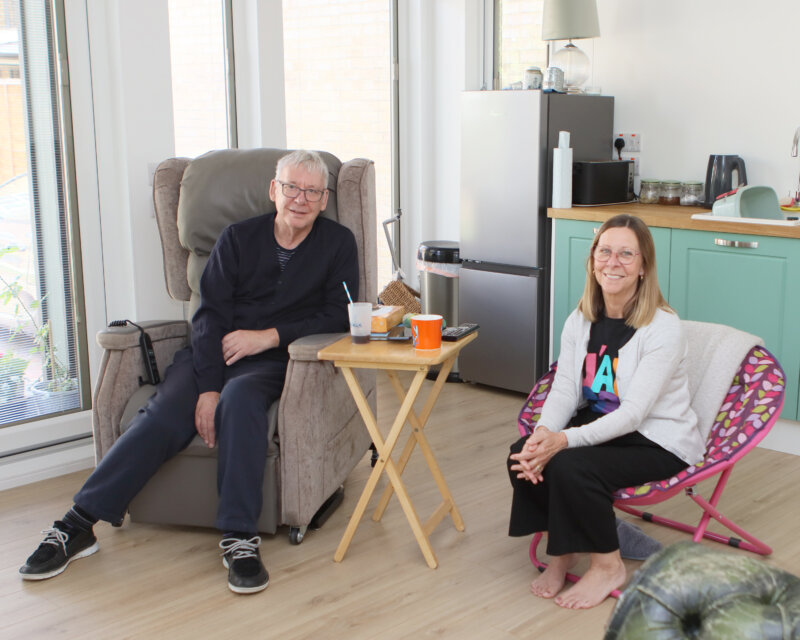
Richard lives with his wife, Moira, in Braintree. He has motor neurone disease (MND) and has been receiving care from Farleigh for nearly a year. This has included help and advice when they decided to move out of their two-storey house into a custom-built home in their son’s garden.
Gill, Farleigh’s Clinical Specialist Occupational Therapist, and Tessa, Farleigh’s MND Coordinator, have been advising them on the adaptations needed for the design and build, including the specialist equipment required to ensure the home remains suitable as Richard’s MND progresses.
Richard said, “When we decided to move, Gill helped us with the plans for the house. It is a 50m2 pre-fab by Garden Annexes. The shell is standard, but we wanted to design the interior to be easier for me to use. With help from Farleigh’s occupational therapy team, I am now using a special electric wheelchair. Following discussions with Gill, there are no carpets and the doorways are wider than standard, with sliding doors, to allow straight through access which is easier to manage. We will also have a ramp and veranda. Our daughter-in-law is a keen gardener so we can enjoy the view from the large windows.”
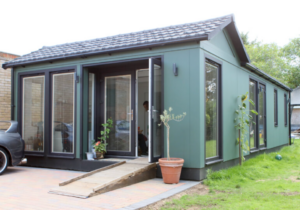
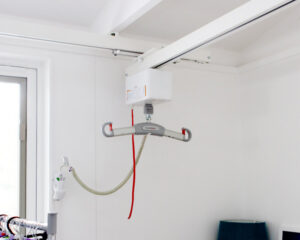
Moira added, “Gill also advised on the hoist for the bedroom. We left the beams exposed and the hoist is constructed so it can be used across the whole room – it’s brilliant. The bathroom is a wet room, but Richard was finding a standard shower chair wasn’t high enough, making it difficult for him to use the shower comfortably.
“The Farleigh team suggested we contact ReMap. They are a charity made up of volunteer retired engineers and craftspeople who design and adapt specialist equipment that is not available on the open market. They raised the chair height, so it now fits him. As Richard gets weaker, we can use the hoist in the bedroom to lift him into the shower chair.”
Richard continued, “Farleigh chose and ordered my special armchair in the lounge. It’s a riser/recliner so I can lie back for a sleep or tilt it so it lifts me up to move from my armchair to my wheelchair. Without Farleigh’s advice, I wouldn’t be able to get out of my chair.”
Gill said, “Richard and Moira have been totally proactive and sought out what might help Richard live as independently as possible. He has an engineering background which has been useful when we’ve talked through different pieces of equipment that might help.”
Richard added, “Farleigh also referred me for speech therapy, and I have already banked my voice with SpeakUnique. I read a passage from the first chapter of War of the Worlds in sections which was recorded. When I eventually need to use the software, it will read what I want to say in my own voice.”
Richard and Moira also attend the monthly Neuro Peer Support Group at Farleigh, where they can talk to others in similar circumstances.
Tessa said, “The peer support group is open to our patients with neurological life-limiting illnesses such as MND. It is led by the Farleigh specialist physiotherapist and patients and their families can have a chat over a cuppa. One of the benefits of coming to the group is making new friends who are experiencing similar challenges.”
Moira said, “The peer support group is brilliant. We go every month. We come away every single time with some useful information. I’ve learnt about lifting and moving Richard so I don’t hurt my back.”
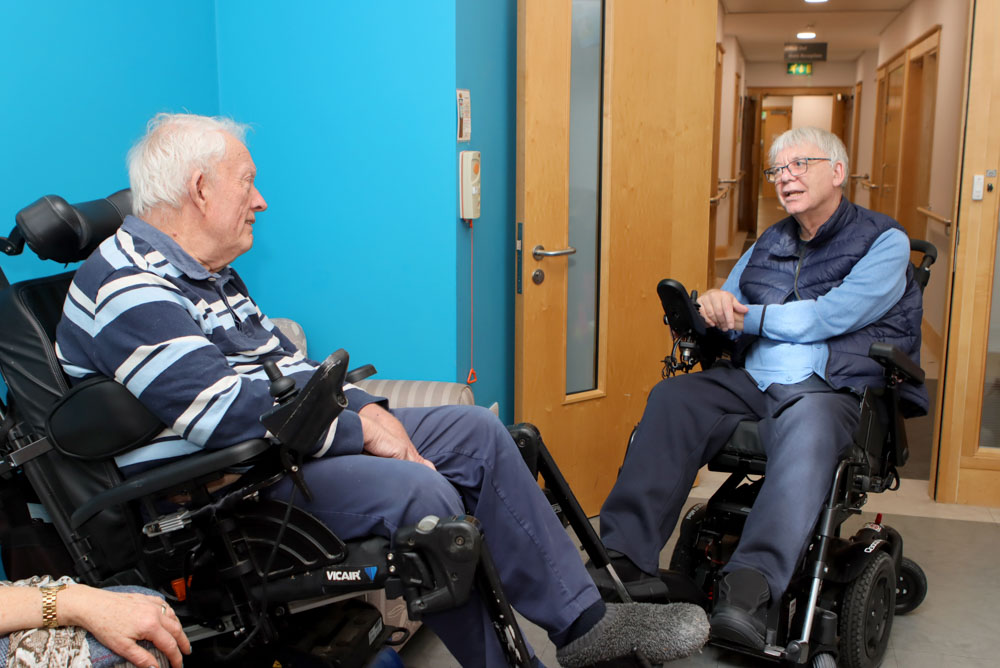
Richard said, “I wanted to speak to other people about how they were dealing with things, because everyone is at different stages.
“There are no exercises that can help me. Debbie the physio advised that instead I think about having a pot of energy and save my strength to do the things I really want to do.
“Whenever I have a question, query or concern it’s comforting to know that the team at Farleigh are only a phone call away. Both Moira and I find that very reassuring especially given that MND’s progress is unpredictable. We are always met with kindness and respect. I am treated as a person and not an ‘MND case’. The help and support we both receive is amazing and we are very grateful for it.”
Care made possible by our community
Your donation ensures people like Richard and Moira receive the support they need, when they need it most.