
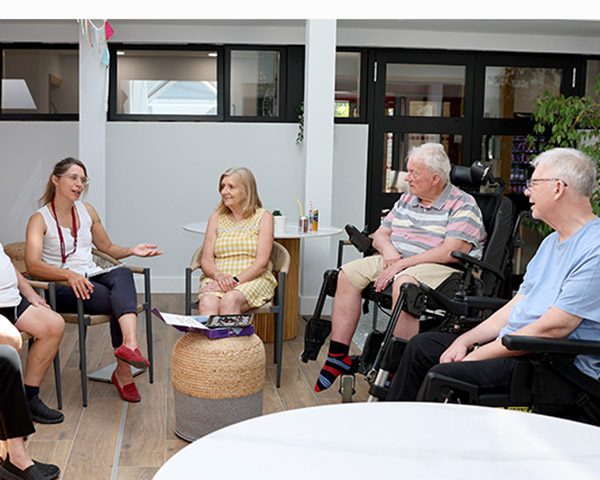
Improving Motor Neurone Disease care in Essex
In Essex, there is currently no dedicated MND care centre. This means patients often travel between multiple hospitals to see different specialists, sometimes on different days. At Farleigh Hospice, work is underway to strengthen these pathways so patients can access the right support at the right time.
This July, Tessa Rose, Farleigh Hospice’s MND Coordinator, and Debbie McGuinness, Farleigh Hospice’s Specialist Neurological Physiotherapist, have been leading two initiatives to improve understanding across the system: a new information pack for GPs and a teaching session for hospital doctors, known as a Grand Round.
Supporting GPs to recognise and manage MND earlier
The GP information pack is designed to support earlier recognition and action. It also signposts clinicians to advice on managing symptoms once a patient is diagnosed.
“Most GPs will only see one patient with MND in their whole career,” Tessa explains. “The pack highlights early symptoms, outlines key referrals, and signposts GPs to support from Farleigh and further afield.”
Training hospital doctors through MND grand rounds
Alongside this, Debbie and Tessa have led a Grand Round at Broomfield Hospital. These sessions provide practical guidance for hospital doctors who may only occasionally care for someone with MND.
“We used this session to discuss two case studies. These gave the doctors a full picture of the experience of our MND patients and then we asked them for some suggestions as to how we could improve patient experience. We talked about the steps that we have taken to strengthen the pathways of care for our MND patients. We also highlighted some of the emergencies our MND patients may face and the treatments available for these emergencies.
“We hope that clinicians come away from our training with a better sense of what life is like for our MND patients, and what a good hospital admission would look like.”
How joined-up care improves outcomes for MND patients
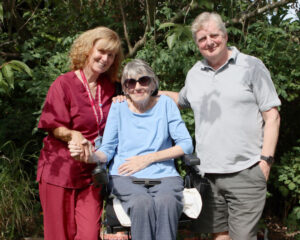
Farleigh Hospice Occupational Therapist with MND patient Ann and her husband Peter in their garden
This focus on earlier, joined-up care can make a real difference. One patient recently mentioned to the team that he had started coughing when eating.
“At the multi-disciplinary team meeting the next day, I raised this to the wider team,” Tessa says. “The Dietician and Speech and Language Therapist arranged a home review, and the patient was later offered a small feeding tube, easing the pressure of maintaining his weight.”
Building a stronger MND support network across Essex
By strengthening relationships across hospitals, community teams and hospice services, Farleigh is helping to build a more coordinated network of care, ensuring patients feel supported and informed from diagnosis.
“The privilege of being allowed into the lives of our patients and families at a really difficult time is never lost on me,” Tessa says.
Tessa hopes that, as awareness of MND continues to grow, so too will the strength of the professional networks supporting patients, so that no one has to face an MND diagnosis alone.
“With the right support in place from the start, people living with MND can continue to do the things that matter most to them for as long as possible. Early, coordinated care helps manage symptoms proactively, maintain independence, and support patients and families to live as well as possible throughout their journey.”
Learn more About MND Support from Farleigh Hospice
To learn more about motor neurone disease and the support available from Farleigh
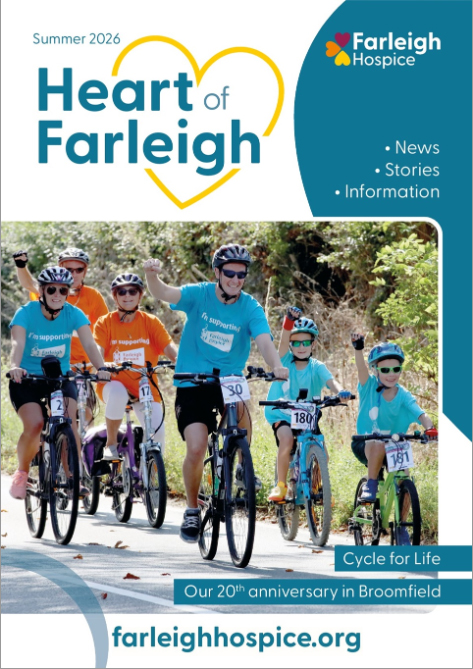
Heart of Farleigh Magazine
This article first appeared in the summer 2026 edition