
When Lois’s mum was diagnosed with stage four anal squamous cell carcinoma in 2019, life became increasingly difficult. Alongside her own chronic illnesses, Lois was supporting her mum through years of gruelling treatment, including radiotherapy and chemotherapy.
As a full-time carer, much of her attention was focused on her mum’s needs. But she also needed someone to talk to about what she was going through.
“I felt I needed to speak to someone from an outside perspective, and to have a general, normal conversation with,” Lois explains.
Although she had friends and loved ones around her, Lois sometimes found it difficult to open up to them about her feelings. She worried about putting her problems on other people and wanted somewhere she could talk freely, without feeling she was burdening anyone.
Having discovered Farleigh Helpers through her work at Farleigh, she decided to give the telephone befriending service a try.
A little bit of normality
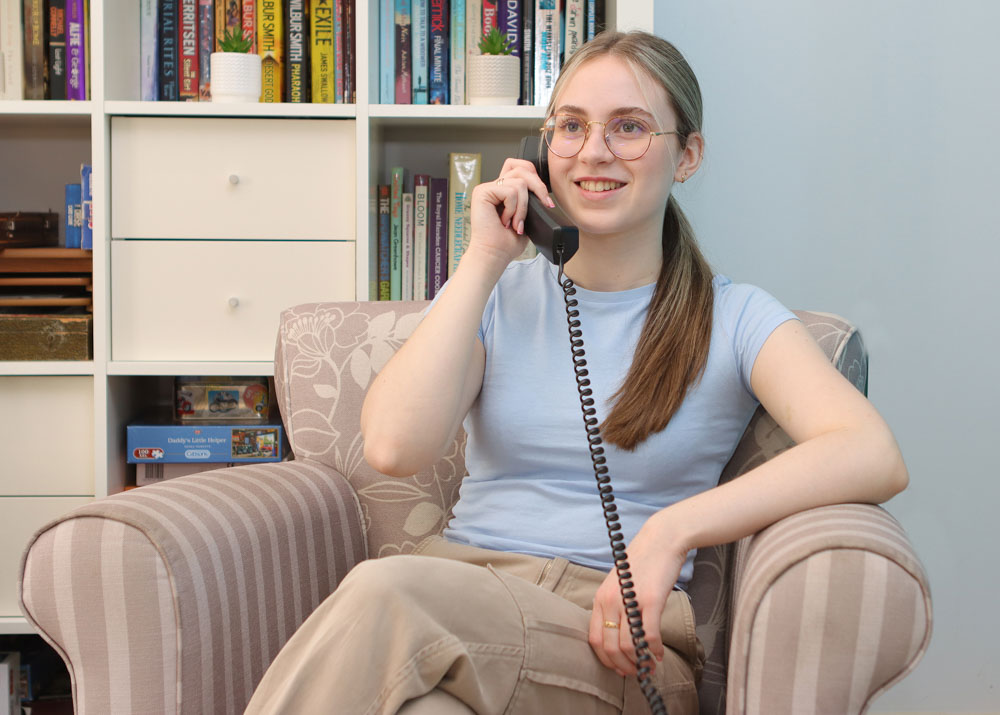
Farleigh Helpers connects people who may be experiencing loneliness, isolation or bereavement with volunteers who offer regular telephone calls and a friendly listening ear.
For Lois, being able to speak to someone over the phone was particularly important. She could choose somewhere she felt comfortable, whether that was at home, in her car or out in the park, and talk without worrying about being overheard or judged.
Although she was initially nervous about speaking to someone she had never met, she soon discovered that she could talk about whatever she wanted.
“There was no pressure to speak about the hard emotions,” she says.
Her conversations with her Farleigh Helper varied from week to week. Sometimes they talked about the side effects her mum was experiencing during treatment. At other times, they chatted about Lois’s work, plans for the week or a night out with friends.
“Having my befriender was a moment of normality in what was the hardest time of my life,” she explains.
“It felt good to have someone ask me what I perceive as ‘normal’ questions, and not about what I was facing.”
Having that regular connection also gave Lois the opportunity to recognise the small positives in her life. Her volunteer remembered things they had discussed in previous conversations and would check in on how things were going, helping Lois notice progress she might otherwise have overlooked.
“It was amazing to have someone so focused on me and my life,” she says.
Support through caring and loss
Watching her mum experience the painful side effects of treatment was emotionally and physically exhausting for Lois. Her weekly calls became an important opportunity to acknowledge her own feelings, which could easily get lost while caring for someone else.
“Having these weekly regular calls gave me comfort but also a bit of time to be in touch with my own emotions and feelings, which as a carer can get lost,” she says.
The support continued after her mum died, when Lois was trying to process her grief and adjust to life without her.
Alongside support from Farleigh’s family support team, her conversations with her Farleigh Helper offered something different: a familiar connection and the chance to take a break from the intensity of what she was experiencing.
“Even if I only felt like talking for 10 minutes, those 10 minutes were enough for my brain to switch off and think about something other than my mum’s death,” Lois explains.
At a time when everything felt unfamiliar and out of place, the regular calls gave her a routine to hold on to.
One moment, in particular, has stayed with her. During one of their later conversations, her volunteer brought up something they had discussed at the beginning of their time together.
Although Lois knew her volunteer kept notes to help her remember their conversations, being reminded of something she had shared made her feel genuinely listened to and cared about.
She explains that this attention to detail meant a great deal to her, particularly at a time when she worried about being forgotten as other people’s lives continued around her.
Finding the confidence to talk
For Lois, the benefits of Farleigh Helpers have lasted well beyond the time she spent receiving calls.
She says she has always been frightened of death and found it difficult to talk openly about it. Having someone she felt comfortable with gave her the confidence to begin expressing feelings she had previously kept to herself.
“As someone who was, and still is, absolutely terrified of death and talking about it, this service and conversations were an opening for me to begin talking about it openly, and my feelings towards it,” she says.
“I feel so much lighter talking openly rather than bottling it all up.”
Looking back, Lois believes that having someone outside her immediate circle to talk to made a real difference, both while her mum was unwell and as she navigated her grief.
She believes the flexibility of the service is particularly valuable, allowing people to talk about whatever is on their mind, without feeling they have to discuss difficult subjects.
“You can sway the conversations with your Farleigh Helpers as you please and there is no pressure to mention anything in particular. It is a service tailored to you and what you feel you need them for,” she explains.
Five years of making connections
As Farleigh Helpers celebrates five years of supporting people across our community, Lois is keen to recognise the volunteers who make the service possible.
Their time and willingness to listen can make a real difference to someone who needs a regular connection with another person.
“To those who willingly give their time to help individuals in the community who may be feeling lonely, isolated or going through a bereavement, you offer time and a listening ear to those who need it most, and us who have experienced it or yet to experience it are forever grateful to have that,” she says.
“We couldn’t run this service without you, and I hope to see this service run for years to come for our community because you’re special enough to be there for people that need a consistent and trustworthy person on the other side of the phone.”
For Lois, having someone who remembered their conversations, took an interest in her life and made time to listen helped her feel less alone during an incredibly difficult period. Her experience shows how a regular telephone call can offer comfort and connection when someone needs it.
Could Farleigh Helpers help you?
Farleigh Helpers offers telephone befriending to people who would benefit from regular contact and a friendly listening ear. Whether you are experiencing loneliness, caring for someone who is unwell or coping with bereavement, having someone to talk to can help.
If you have time to spare and would like to make a difference to someone in your community, volunteering as a Farleigh Helper could be a rewarding way to offer your support.
Find out more about our Farleigh Helpers service
Farleigh Helpers offers free, friendly telephone support for anyone in the community who needs a listening ear, helping reduce loneliness and provide connection through regular conversation.